
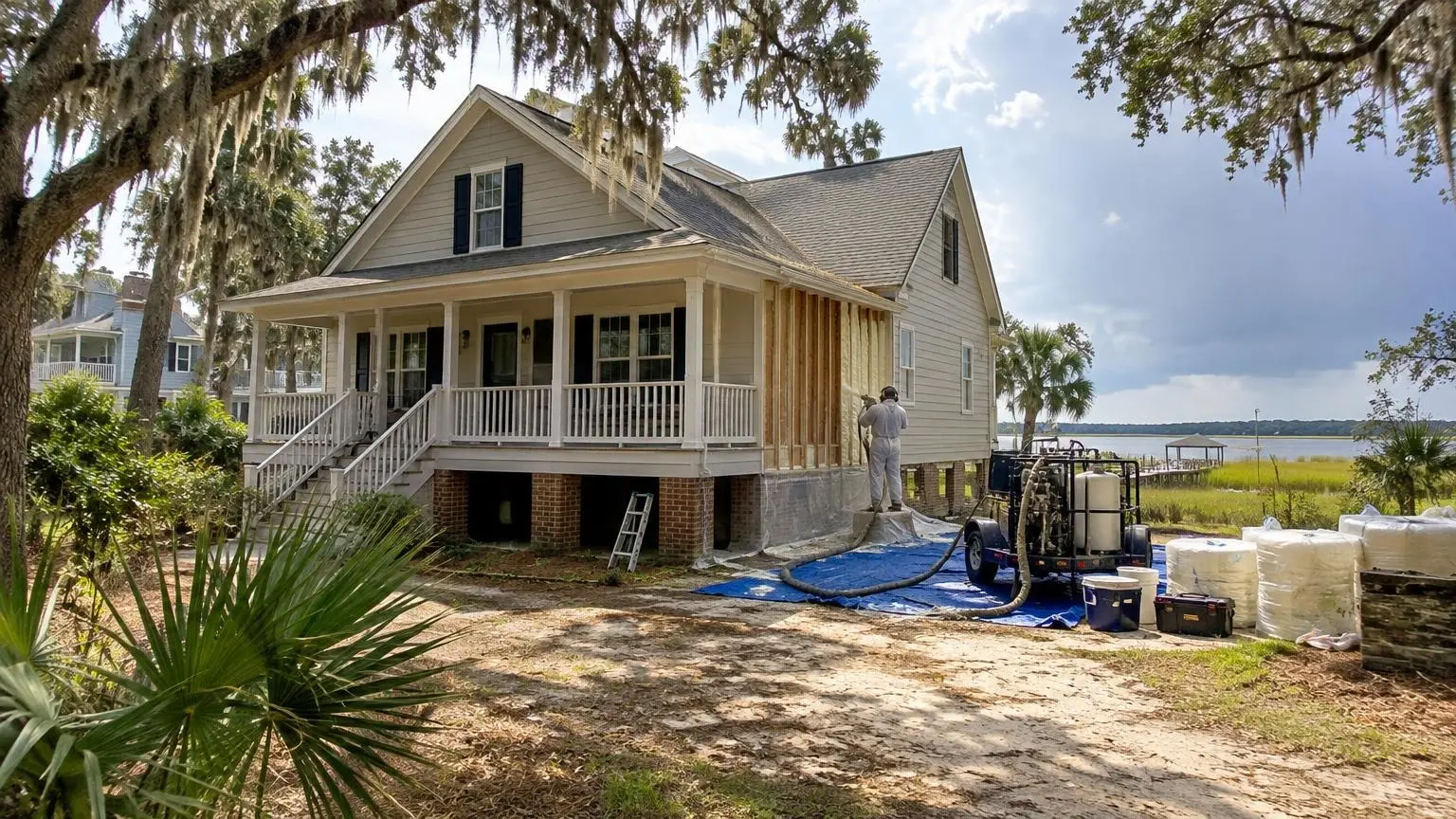
Homes on piers and pilings
Raised Floor Insulation in Savannah, GA
Warmer floors in winter and fewer drafts, with a material that can take a flood.
- Free on-site estimates
- Written quotes listing foam type, thickness and R-value
- Moisture, flood-zone and termite access checked before we seal
Insulating the Floor of a Raised Home
Raised floor insulation is for houses with open air underneath: cottages on brick piers, island homes on pilings, and older houses whose crawl space walls never closed in. On Tybee Island, Wilmington Island, Isle of Hope and other low ground around Savannah, raising a house above flood level is common. The space under the floor is effectively outdoors, so the floor itself has to be the insulated, air-sealed boundary of the house.
Why batts fail under raised homes
Fiberglass batts held up with wire or netting are the old standard under raised floors. Wind moves right through them, humidity soaks into them, and they sag or fall within a few years, especially after a storm. Animals nest in them. When we look under raised homes, fallen batts and gaps at the edges are the most common thing we find.
Closed-cell foam on the subfloor
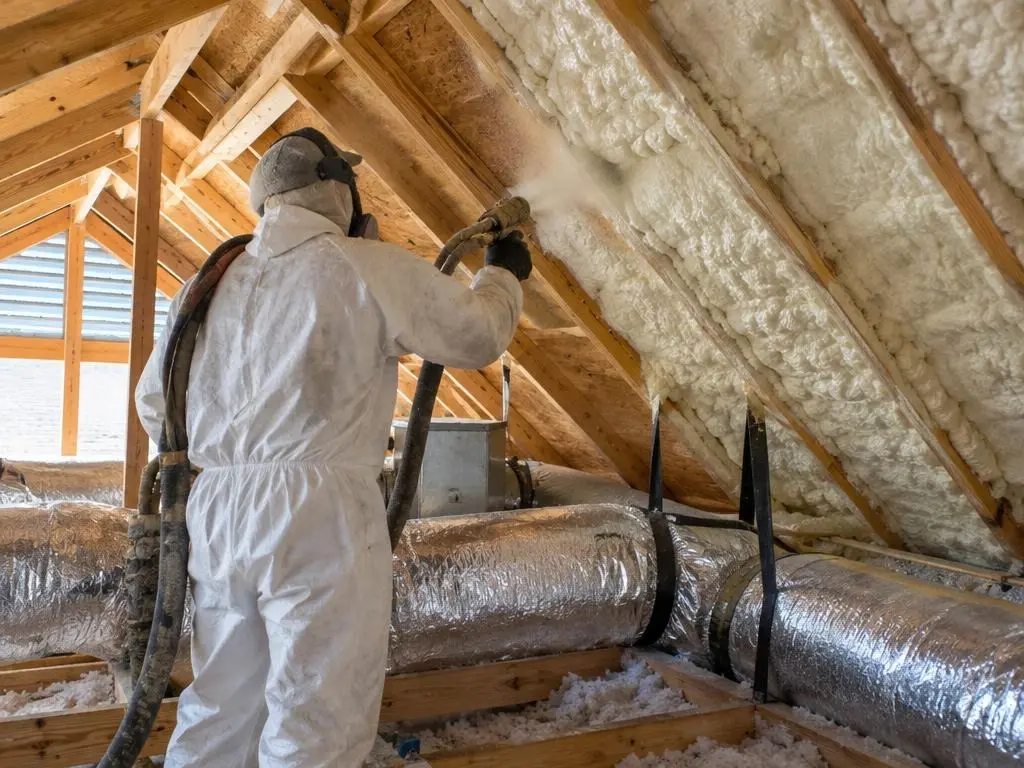
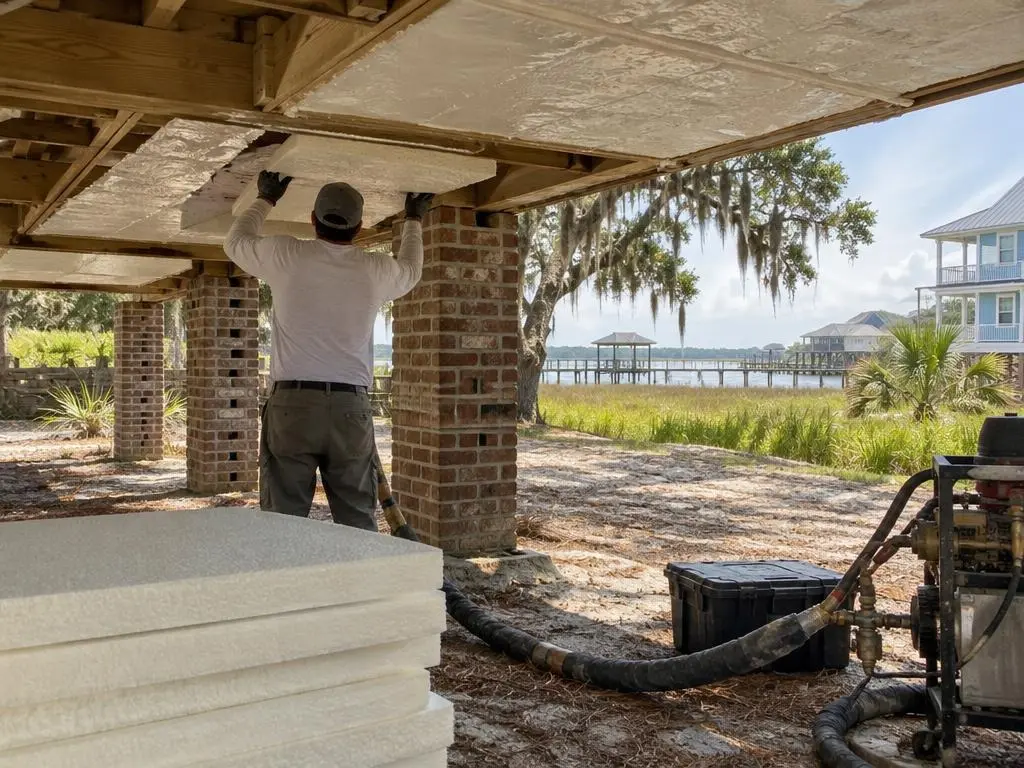
Closed-cell spray foam sprayed directly onto the underside of the subfloor and the joist sides seals the floor against wind and humid air and adds R-value in the same pass. At roughly R-5 to R-7 per inch, two to three inches meets the Department of Energy's R-13 suggestion for Zone 2 floors. It also helps keep ducts and plumbing under the floor out of the outside air when they run between joists.
Flood zones
Many raised homes here are in mapped flood zones. FEMA's 2025 Technical Bulletin 2 lists closed-cell foam as an acceptable flood damage-resistant material, while open-cell foam, cellulose and other absorbent insulation are rated unacceptable. That makes closed cell the only spray foam we use below the flood elevation. We ask for your flood zone and elevation certificate if you have one.
Protecting the foam
Under a house on pilings, foam is exposed to sunlight and weather at the edges, and some homeowners want it covered. We can talk through coverings, and where the space under the house is used for storage or parking, local rules on enclosures and breakaway walls apply, so we keep our work to the floor assembly.
Plumbing and ducts
Pipes and ducts hanging below the joists stay outside the foam layer. We note them on the quote, since they may need their own insulation or rerouting, and we keep access to cleanouts and valves. Get a free estimate
What This Covers
Under-floor work for raised homes.
Closed-cell under the subfloor
Foam sprayed to the subfloor and joist sides to seal and insulate.
Fallen batt removal
Old, wet or nested insulation bagged and hauled away first.
Rim and band sealing
Foam at the band joist and sill where wind gets in.
Floors over garages and porches
Foam on floors over unconditioned parking or storage areas.
Pipe and duct notes
Exposed lines flagged for insulation or rerouting on the quote.
Published Costs for Under-Floor Foam
| Job | Range and source |
|---|---|
| Closed-cell spray foam, installed | $3.00 to $5.00 per sq ft (HomeGuide) |
| Crawl space or under-floor spray foam | $2,000 to $4,000 (HomeGuide); $1,000 to $5,900 (Fixr) |
| About 1,000 sq ft of foam | $1,500 to $5,000 (HomeGuide) |
| Old insulation removal | $1 to $2 per sq ft (HomeAdvisor) |
| Typical spray foam minimum | $1,000 to $2,000+ (HomeGuide) |
These come from HomeGuide (2026), Fixr (2025) and HomeAdvisor (2026) and are national, not pier-home specific. Height off the ground, access, debris, foam thickness and covering change the total. We measure under your house and the written estimate is the price.
How It Works
1. Look underneath
We check the subfloor, joists, pipes, ducts, old insulation and flood vents, and ask about your flood zone.
2. Written quote
Foam thickness, R-value, removal and any coverings, priced per area.
3. Clear and prep
Old batts removed, wood checked for moisture, pipes and valves protected.
4. Spray
Closed-cell foam applied to the subfloor and joists in proper lifts.
5. Review
Thickness spot-checked and the work walked through with you.
Raised Floor Insulation Questions
Can you insulate a house on pilings?
Yes. Closed-cell foam on the underside of the floor seals and insulates it with no enclosed crawl space needed.
Is spray foam allowed in a flood zone?
FEMA's flood-resistant materials bulletin rates closed-cell foam acceptable below the flood elevation and open-cell foam unacceptable. Local floodplain rules still apply, so we ask about your flood zone before quoting.
How thick should under-floor foam be?
The Department of Energy suggests R-13 for Zone 2 floors, which closed-cell foam reaches in about two to three inches. We list the thickness on the quote.
What happens to foam if it floods?
Closed-cell foam does not soak up water like batts. After a flood the area still needs to be cleaned and dried, and we can check it for damage.
Raised Floor Insulation Service Areas
- Spray Foam Insulation in Savannah, GA
- Spray Foam Insulation in Pooler, GA
- Spray Foam Insulation in Richmond Hill, GA
- Spray Foam Insulation in Rincon, GA
- Spray Foam Insulation in Tybee Island, GA
- Spray Foam Insulation in Garden City, GA
- Spray Foam Insulation in Port Wentworth, GA
- Spray Foam Insulation in Bloomingdale, GA
- Spray Foam Insulation in Thunderbolt, GA
- Spray Foam Insulation in Wilmington Island, GA
- Spray Foam Insulation in Skidaway Island, GA
- Spray Foam Insulation in Isle of Hope, GA
- Spray Foam Insulation in Georgetown, GA
- Spray Foam Insulation in Guyton, GA
- Spray Foam Insulation in Springfield, GA
Get a Raised Floor Insulation Estimate
Get a written quote for the floor of your raised home.